
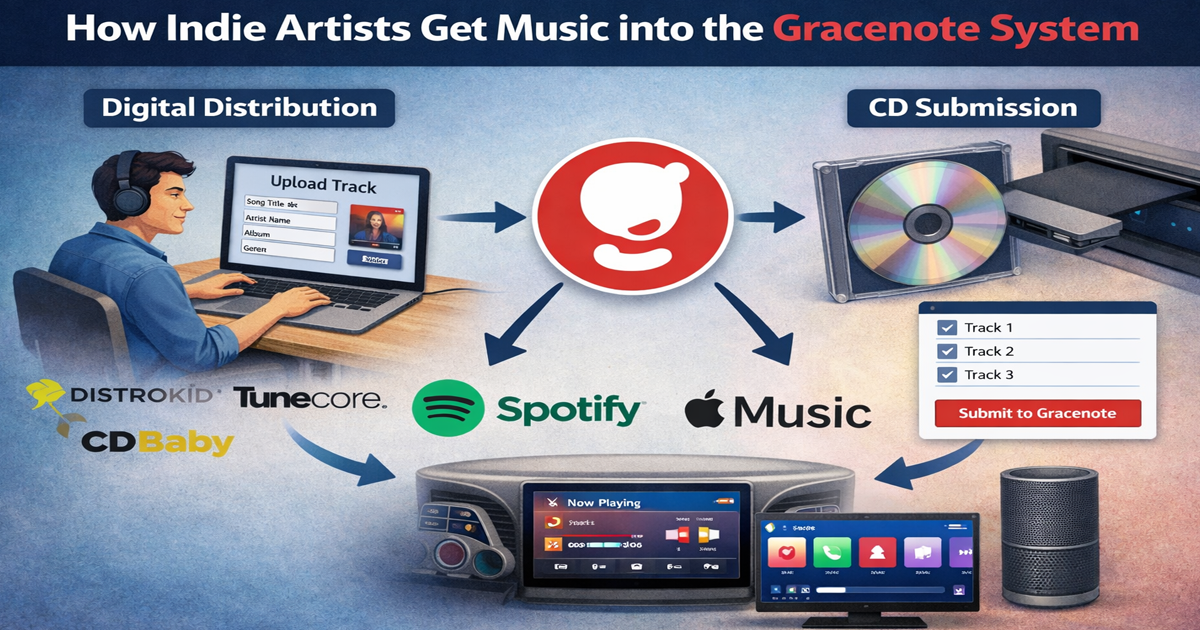
When a CD is inserted into certain media programs, the software checks the Gracenote CD database. If the album information is missing, users can enter the track titles and album details manually, which are then uploaded to the database.
Programs that historically submitted CD metadata include:
iTunes or Winamp
Once the information is submitted, other users who play the same CD will see the correct song titles and album information automatically.
How Gracenote Works for Indie Singers
For independent singers and musicians, getting music discovered online can be challenging. One important system that helps organize and identify music across many platforms is **Gracenote**. Although many artists never interact with it directly, it plays a major role behind the scenes in how music appears on devices, streaming services, and media players.
Gracenote is one of the world’s largest **music metadata databases**. Instead of hosting or selling music, the company stores detailed information about songs and artists. This information—called **metadata**—includes the song title, artist name, album name, genre, release year, cover art, mood, tempo, and other descriptors. The database contains data for **tens of millions of tracks worldwide**, allowing digital platforms to organize and recognize music accurately.
When a song is played on a media player, car stereo, or streaming service that uses Gracenote technology, the system checks the database to match the audio or metadata. If the song is recognized, the device can display the correct track title, album cover, artist information, and related music recommendations. In some cases, Gracenote can even identify songs using **audio fingerprinting**, comparing a short snippet of audio to its massive database.
For indie singers, the key benefit of Gracenote is **visibility and discovery**. When a song is distributed through digital music distributors (such as those delivering music to platforms like Spotify or Apple Music), its metadata may eventually appear in the Gracenote database. Once listed, the song can be recognized by many devices and apps around the world, including smart TVs, car infotainment systems, and voice assistants.
Gracenote also analyzes music using machine learning to classify songs by style, mood, and genre. This helps streaming services create better playlists and recommendations, allowing listeners to discover new artists—including independent ones—who match the style of music they enjoy.
It is important to note that Gracenote **does not pay royalties or sell music directly**. Instead, it acts as a data layer that helps music platforms identify and organize songs correctly. The increased accuracy and discoverability can indirectly help indie artists gain streams and sales through the platforms that actually distribute their music.
In simple terms, Gracenote works like a global **music information library**. For indie singers, being included in this database means their music is easier for devices and services to recognize, display, and recommend to listeners worldwide.
#IndieArtists
#MusicDistribution
#IndependentMusic
#MusicMetadata
#MusicIndustryTips
#IndieMusicBusiness
#MusicDiscovery
#DigitalMusicDistribution
#MusicData
#ArtistResources
#IndieMusicTips
#MusicTech
#DIYMusician
#MusicMarketing
#MusicBlog